



ui.ed.blog.template.post.title.settingUpYourBusiness
duda_designers • 16 September 2019
This is a subtitle for your new post
Write about something you know. If you don’t know much about a specific topic, invite an expert to write about it. Having a variety of authors in your blog is a great way to keep visitors engaged.
Speak to your audience
You know your audience better than anyone else, so keep them in mind as you write your blog posts. Write about things they care about. If you have a company Facebook page that gets lots of comments, you can look here to find topics to write about.
Speak to your audience
You know your audience better than anyone else, so keep them in mind as you write your blog posts. Write about things they care about. If you have a company Facebook page that gets lots of comments, you can look here to find topics to write about.

Write about something you know. If you don’t know much about a specific topic, invite an expert to write about it. Having a variety of authors in your blog is a great way to keep visitors engaged.
You know your audience better than anyone else, so keep them in mind as you write your blog posts. Write about things they care about. If you have a company Facebook page that gets lots of comments, you can look here to find topics to write about.

Help your child finish the 11+ paper with confidence. Smart Kids Tutoring in Oldham provides mock exams, pacing strategies and targeted exam preparation.
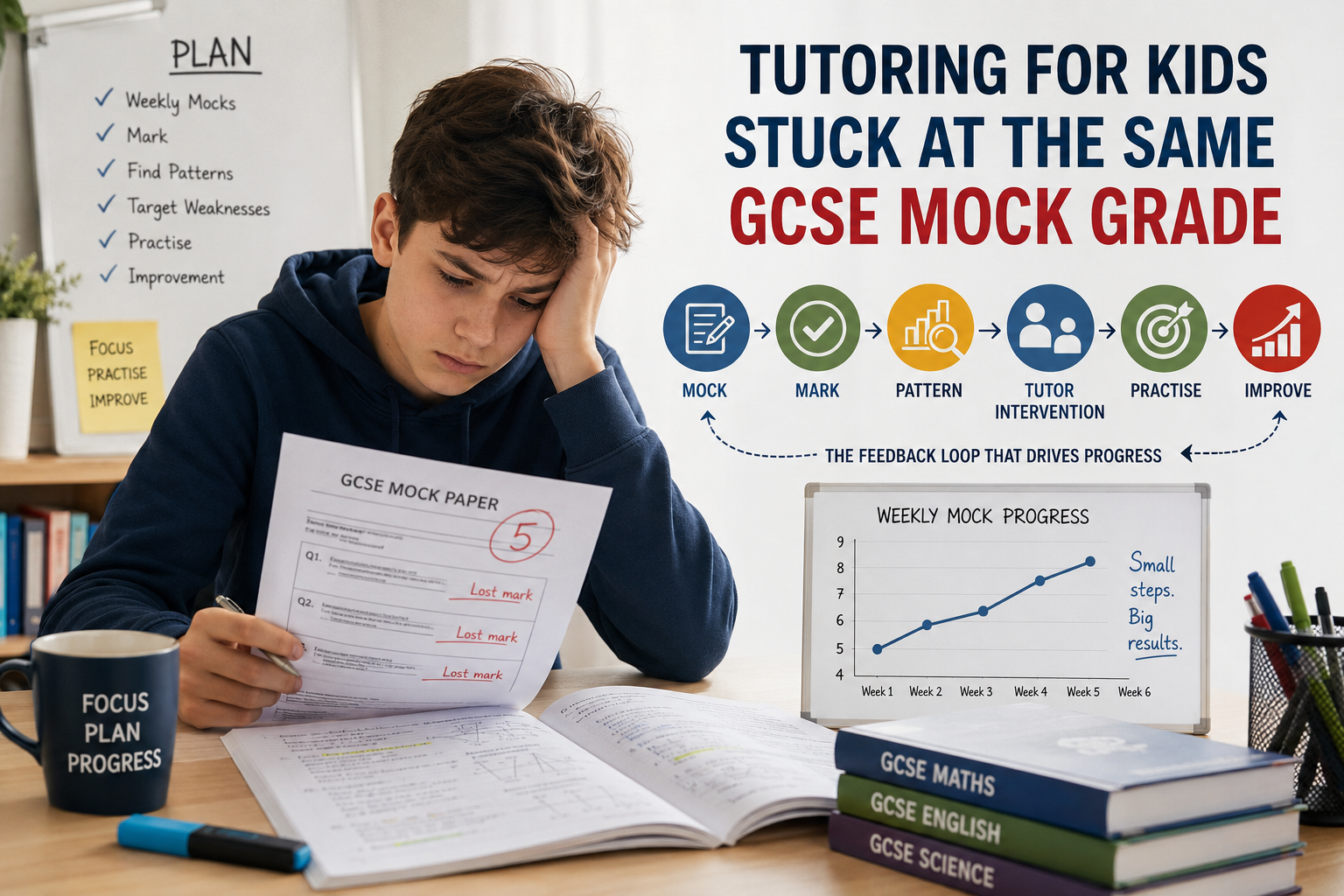
Many Year 11 parents watch their child put in extra hours of revision yet see the same mock grade appear again. The effort increases. The score stays flat. This leaves families asking why GCSE mock grades refuse to move. We focus tutoring for kids on the marks that keep disappearing rather than on volume of work alone. Repeated mistakes vs actual knowledge gaps Two different problems can look identical on a results sheet. One is a genuine gap in understanding. The other is a repeated slip in technique or interpretation of the question. A knowledge gap means the student never fully grasped the concept. Extra revision of the topic can close it. Self-marking against model answers makes the difference clear. The student sees exactly where the marks vanished and why. What 4–6 weeks of mock scores can tell you At Smart Kids Tutoring, our Year 11 students sit weekly mock examinations throughout the academic year. These papers mirror real exam conditions, timing and question styles. Over four to six weeks, the results form a clear picture. Strengths stay consistent. Weak question types appear again and again. The data shows whether a plateau comes from one or two specific areas or from a broader pattern of lost marks. Parents and students can track progress from week to week. The scores stop being a single snapshot and become a running record of where attention needs to go next. Turning one weak question type into the next tuition target Once the pattern is clear, the student brings the marked paper to their tutor. The tutor works directly on the difficult areas. Tuition time stays focused on the exact gaps rather than on material the student already manages. If a certain style of calculation or a particular command word keeps costing marks, that becomes the next target. The student practises the corrected approach until it holds under timed conditions. The cycle then repeats: another mock, fresh marking, updated pattern, further focused work. This keeps the intervention precise and measurable. How Oldham academic coaching creates a feedback loop Our Oldham academic coaching rests on a simple sequence. Students sit the mock. They mark it against the model answers. They identify the pattern of lost marks. The tutor intervenes on those specific points. The student practises the corrected method. They sit the next mock and measure the change. This feedback loop sits at the centre of what we offer at Smart Kids Tutoring. Weekly mocks give regular data. Self-marking builds insight. Tutor sessions convert that insight into targeted practice. The next mock confirms whether the change has stuck. When mock grades don’t improve, more of the same revision never shifts the result. A clear cycle of mock, mark, pattern, intervention, practice and re-test does. At Smart Kids Tutoring , we run that cycle every week for our Year 11 students so that tutoring for kids stays tightly linked to the marks that matter. If your child’s GCSE mock grades have stopped moving, book a free consultation and assessment. We will show you how the weekly mock programme and focused Oldham academic coaching can turn the next set of results into measurable progress.

Is your child understanding maths but underperforming in exams? Learn how our targeted GCSE maths tuition in Oldham identifies and fixes lost marks.